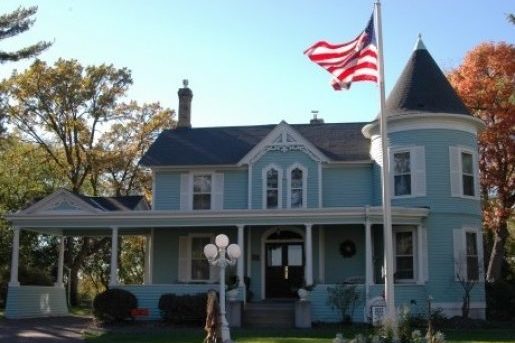
Anoka
Travel to Anoka, MN, the “Halloween Capitol of the World” for fun attractions, events and activities. Anoka is home to numerous interesting attractions. Anoka’s historic downtown boasts an array of eclectic and unique shops, restaurants and services, all surrounded by beautiful city parks, trails, and neighborhoods. Anoka is also proud of its Enterprise Park located on the west side of town brimming with large manufacturing, machining, and distribution businesses, providing employment for over 2,500 people. The largest private employers in Anoka are Federal Cartridge Company and Pentair Custom Products which employ another 2,500 people.
The city-owned Greenhaven Golf Course & Banquet Center and the Anoka Aquatic Center provide hours of seasonal entertainment, while the Anoka Senior Center provides meals and fun activities for seniors all year long. Plus, events such as Anoka Riverfest & Craft Fair and the Anoka Classic Car Show draw visitors from all over during the summer and of course Anoka is known as the "Halloween Capital of the World" so each year the month of October is filled with fun activities for all to enjoy including three parades and a 5K Grey Ghost Run.
Throughout Anoka, businesses, products, services, entertainment, and activities are abundant. Search for attractions and events on the Anoka things to do page. Find lodging specials or search for accommodations on the Anoka lodging page. We have a wealth of Anoka tourism information. If you can’t find what you are looking for contact us and we’ll help you get the information you need. Travel to Anoka, we would love to share what our community has to offer with you! Anoka – Real. Classic.
History
The two rivers, Rum and Mississippi, played an integral part in Anoka's settlement. Father Lewis Hennepin first visited this area in 1680 and settlers came to stay in 1844. Prior to the 1800's, the area surrounding Anoka was claimed by the Dakota, but later the Ojibwa pushed the Dakota westward across the Mississippi. The territory of Anoka then became a neutral ground between the two tribes. The name Anoka was derived from two Indian words, the Dakota word A-NO-KA-TAN-HAN meaning on both sides of the river, and the Ojibwa word ON-O-KAY, meaning working waters.
The first settler in the Anoka area was Joseph Belanger who built a log cabin on the east side of the Rum River near its mouth. Initially, the cabin was used as a trading post with the Indians, but later was used as a temporary home for a number of early settlers.
In the late 1840's, the first logging operations took place in the Anoka area. The logs were floated down the Rum River to the Mississippi River to the saw mill in St. Anthony. In 1853, the first dam was constructed on the Rum River at its present location and in 1854 the first sawmill began operation. Other saw mills, wood working plants, and cooper shops-barrel makers quickly sprang up along the banks of the Rum River using water as their source of power. For the next thirty years milling was an important industry in Anoka.
After the decline of the saw mills in late 1885, a Board of Trade was organized to encourage other industries to move to Anoka. In 1886, a potato starch factory was built on the west side of the Rum River north of the dam. During this time, before the Red River Valley opened, Anoka County was the center of potato production. Also operating at this time was the Anoka Shoe Factory which employed 80 people and produced 800 pairs of shoes per day. In 1898, a bill was passed by the state legislature to construct a state hospital in Anoka. The hospital is now known as the Anoka-Metro Regional Treatment Center.
In 1856 a ferry was established across the Mississippi river connecting Anoka with the City of Champlin. After 28 years of operation, the ferry was replaced in 1884 by a steel bridge. The bridge had a turntable in the middle, operated by a hand winch that opened up two channels to allow boats to pass up or down the river. Other transportation in that era was a horse-drawn streetcar system and rail service to St. Paul.
In its early years, Anoka suffered setbacks due to five major fires between 1855 and 1884. The worst fire was in the downtown area, in 1884, which destroyed 86 buildings between the Rum River and Third Avenue. Within a few years this whole section was rebuilt. Again, tragedy struck in 1939 when a tornado swept through the east side of town. Many homes, a church, and the armory were destroyed and three lives were lost. However, Anoka again persevered and completely rebuilt the damaged area.